
Back to School season can be challenging not just for kids but also for parents. We wanted to share a few tips that we hope will help during this stressful season and into the rest of the school year.
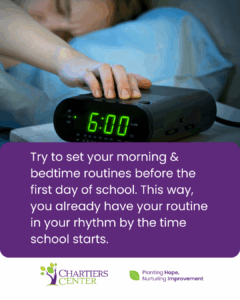
Establish a Routine (Parents and Kids): Work on establishing a healthy routine early. Designate a wake up time, dinner time, free time/leisure time, and bed time as soon as possible before the first day of school. This way, you already have your routine in your rhythm by the time school starts. From then on, all you have to do is make minor adjustments throughout the year.
*If you didn’t get a chance to make a routine early, that’s ok. Try a few things throughout the first semester and then take the Holiday break to establish a good routine that works best for you.
Practice your Calming & Coping Skills (Parents & Students): If you find yourself with some down time and can’t seem to think of anything to do, practice your coping skills and calming techniques. You may have some that are personal to you such as coloring, listening to music, or something to fidget with. However, when we are in a classroom setting, all we may have at our disposal is just our own bodies and minds. Here are a few additional techniques should you not have access to any devices or other items:
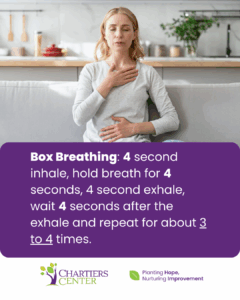
Box Breathing: 4 second inhale, hold breath for 4 seconds, 4 second exhale, wait 4 seconds after the exhale and repeat for about 3 to 4 times.
Grounding technique: When ever you feel too overwhelmed, angry, or stressed, work your way through this list:
5 things you can see
4 things you can touch
3 sounds you can hear
2 things you can smell
Imagery: Think of a happy memory or a place, real or made up, that brings you joy and helps you feel safe. When you have a free minute, close your eyes, take a few deep breaths, and imagine yourself in this place. Sit with the atmosphere and enjoy the positive feelings that this place brings.

Get involved (Students): Whether it is sports, clubs, or an interesting elective class, there are always opportunities to participate in additional activities. These are great outlets to build relationships, learn new skills, and keep yourself active. You don’t have to do it all, nor should you load yourself up to the point of being overwhelmed. At the very least, challenge yourself to at least try one or two different extracurricular activities this year.

Learning can happen anywhere and anytime (Parents & Students): Now that information is at our fingertips, the possibilities to learn something new every day are endless. Believe it or not, it feels good to learn new skills. Even if they are simple ones that you may never use! If you find yourself bored with nothing to do, hop online and research something that you may find interesting. Try to set a goal of learning at least one or a couple new things each week.
Stay Active & Exercise (Parents & Students): No, you do not have to be a body builder or an Olympic gymnast! However, it is highly beneficial to dedicate time to physical activity. Even if it is going for a quick walk around your block, a few pushups in your room, or a stretching routine before bed, physical exercise can help in addressing feelings of depression as well as reducing stress and anxiety.
Maintain a Healthy Diet (Parents & Students): It is highly important to establish a healthy diet. Make sure to have a healthy
breakfast each morning and do your best to limit your intake of junk food and energy drinks. Healthy diets are also correlated with healthy mental functioning as well.

Validation is Key (Parents!): Your children are most certainly going to experience some degree of stress and anxiety both before and during the upcoming school year. It is important to understand that these feelings are natural and valid. What your children need from you in these moments is validation for how they are feeling. You do not have to solve their problems for them, nor should you. The best thing to do is simply provide a non-judgmental safe space for them to express their emotions and share their concerns. When children know that they have someone who will simply listen to them and make them feel heard, this can be the very thing they need to boost their confidence and tackle any challenges that come their way.
No matter what grade you may be going into, this will be the very first time you have ever been in that grade. You are NOT supposed to know everything on day one! The only thing you can do is make the decision to show up each day prepared to learn and willing to ask for help when you need it.
Article written by Chad Tredway, Outpatient Therapist in Washington County!